-

La campagna militare del 1860 da Napoli a Gaeta
- €9,99
- Giuseppe Pavone presenta in questo volume, dedicato agli ultimi mesi di vita combattuta dell’esercito borbonico, come punto centrale la trascrizione di due manoscritti pressoché contemporanei, memorie di due testimoni particolari ed attori delle vicende che vi si narrano, appartenenti a due reparti combattenti di quell’esercito (1° Reggimento Granatieri della Guardia Reale e 14° Battaglione Cacciatori) scritti all’indomani dei fatti narrati sulla base di appunti e note prese sui luoghi in quel fatale 1860 da Napoli a Gaeta. Di Giuseppe Pavone,…
-

Spanish volunteers in Germany during World War II – Vol. 2
- €8,99
- During World War II, Spain did not participate as a nation, although many Spaniards took part, both on one side and the other. After the Spanish Civil War, Francisco Franco’s regime was morally and materially indebted to Germany and Italy, which led to Spain’s alignment with the Axis. The invasion of the Soviet Union by Axis troops gave the Spanish government the opportunity to meet the demand of many ex-combatants and young people who had not had the opportunity to…
-

Spanish volunteers in Germany during World War II – Vol. 1
- €8,99
- During World War II, Spain did not participate as a nation, although many Spaniards took part, both on one side and the other. After the Spanish Civil War, Francisco Franco’s regime was morally and materially indebted to Germany and Italy, which led to Spain’s alignment with the Axis. The invasion of the Soviet Union by Axis troops gave the Spanish government the opportunity to meet the demand of many ex-combatants and young people who had not had the opportunity to…
-

Volontari spagnoli in Germania durante la Seconda Guerra Mondiale – Vol. 2
- €8,99
- Durante la Seconda guerra mondiale, la Spagna non partecipò come nazione, anche se molti spagnoli vi presero parte, sia da una parte che dall’altra. Dopo la guerra civile spagnola, il regime di Francisco Franco era moralmente e materialmente in debito con la Germania e con l’Italia, e questo portò ad allineare la Spagna all’Asse. L’invasione dell’Unione Sovietica da parte delle truppe dell’Asse diede al governo spagnolo l’opportunità di soddisfare la richiesta di molti ex combattenti e di giovani che non…
-

Volontari spagnoli in Germania durante la Seconda Guerra Mondiale – Vol. 1
- €8,99
- Durante la Seconda guerra mondiale, la Spagna non partecipò come nazione, anche se molti spagnoli vi presero parte, sia da una parte che dall’altra. Dopo la guerra civile spagnola, il regime di Francisco Franco era moralmente e materialmente in debito con la Germania e con l’Italia, e questo portò ad allineare la Spagna all’Asse. L’invasione dell’Unione Sovietica da parte delle truppe dell’Asse diede al governo spagnolo l’opportunità di soddisfare la richiesta di molti ex combattenti e di giovani che non…
-
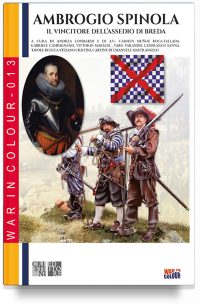
Ambrogio Spinola
- €8,99
- Un grande generale genovese Se Andrea Doria è stato forse il più importante Ammiraglio tra la fine del XV e la prima metà del XVI secolo, Ambrogio Spinola merita di essere menzionato con il medesimo lustro tra i Generali più capaci del XVII secolo. Due figli di Genova, appartenenti a famiglie per lungo tempo rivali, che sono stati in grado di scrivere – a lettere cubitali – il loro nome nella storia militare della prima epoca moderna. Ambrogio Spinola, nato…
-
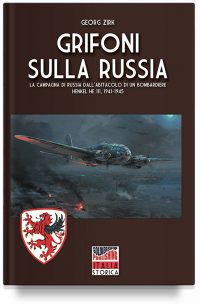
Grifoni sulla Russia
- €8,99
- Diario Di Guerra Di Un Navigatore Puntatore Della Luftwaffe - Georg Zirk era un tedesco che viveva in Polonia all’inizio della Seconda guerra mondiale. Le persecuzioni polacche che nel 1939 portarono alla morte di quattro familiari, lo spinsero ad entrare nella Luftwaffe, dove divenne navigatore-puntatore. Dal 1943 in azione sui bombardieri Heinkel He 111 con i Kampfgeschwader 55 “Greif” e Kampfgeschwader 4 “General Wever”, Zirk volò in 81 missioni di combattimento, di cui 65 notturne, sul fronte Orientale. Vide azione…
-
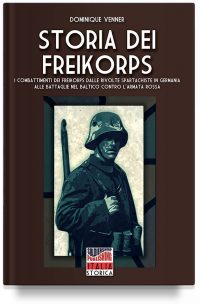
Storia dei Freikorps
- €9,99
- In questo libro, lo storico francese Dominique Venner narra l'epopea dei Freikorps, i corpi franchi nati dalle ceneri dell'Esercito Imperiale nella Germania in preda al caos del novembre 1918. Questi volontari, pronti a tutto per mantenere in piedi il Reich vacillante e le sue frontiere minacciate a est ed ovest, di volta in volta cinicamente usati e rigettati dai politici della Repubblica di Weimar, repressero nel sangue le rivolte spartachiste e anarchiche a Berlino e Amburgo e abbatterono le "Repubbliche…
-
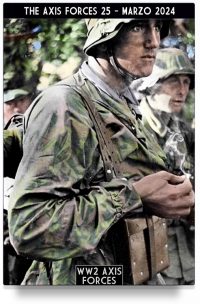
The Axis Forces 25
- €8,99
- In this issue: we start with the history of the Wallonie assault brigade, from its formation to its use on the Ukranian and Estonian fronts. Following that is the biography of a Latvian volunteer, Woldemars Veiss, one of the bravest officers, decorated with the Knight’s Cross. We continue with the employment of the Toteknkopf division in the Demyansk pocket, between January and March 1942. We conclude with a long, but hopefully interesting article by our friend Hugh Page Taylor on…
-

The Republican Police 1943-1945
- €8,99
- The Social Republic had its own Public Security structure, the Republican Police Corps, formed by a kind of dual soul: one territorial, engaged in the institutional tasks of the Police, and one more distinctly a child of the tremendous period that was being experienced, devoted mainly to the persecution of the political opponents of fascism, the partisans, and the hunting of jews. At times these two souls interpenetrated, although the division remained very sharp. Until now very little has been…
-
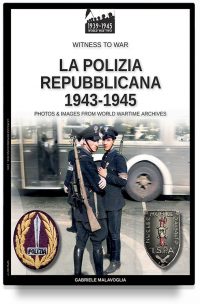
La Polizia Repubblicana 1943-1945
- €8,99
- Anche la Repubblica Sociale ebbe la propria struttura di Pubblica Sicurezza, il corpo della Polizia Repubblicana, formata da una sorta di doppia anima: una territoriale, impegnata nei compiti d’istituto della Polizia, e una più spiccatamente figlia del tremendo periodo che si stava vivendo, dedita principalmente alla persecuzione degli avversari politici del fascismo, i partigiani, ed alla caccia agli ebrei. A volte queste due anime si compenetrarono, nonostante la suddivisione rimase molto netta. Fino ad oggi, ben poco è stato scritto…
-
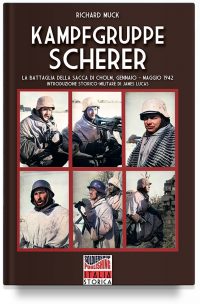
PDF Kampfgruppe Scherer
- €12,00
- L’eccezionale fatto d’armi del Kampfgruppe Scherer fu uno dei successi militari più noti della Wehrmacht durante la Seconda guerra mondiale. Con solo poche migliaia di uomini provenienti da ogni specialità, tra cui Gebirgsjäger, anziani riservisti, membri della Polizei, autieri della Kriegsmarine, Jagdkommando antipartigiani, personale tecnico della Luftwaffe e truppe della logistica e rifornimenti, al Generale Theodor Scherer fu ordinato di tenere la cruciale cittadina di Cholm di fronte alle superiori forze dell’Armata Rossa che l’avevano accerchiata nel gennaio 1942. Nei…
-
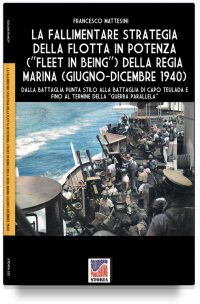
La fallimentare strategia della flotta in potenza (Fleet in being) della regia Marina (giugno-dicembre 1940)
- €9,99
- Il 10 giugno 1940 la Regia Marina Italiana entrò in guerra con una grande flotta, ma purtroppo non ancora perfettamente a punto. Dati alla mano il potenziale navale nazionale era di consistenza assai inferiore a quello della coalizione franco-britannica, visto che la Regia Marina, sulle sei navi da battaglia teoricamente disponibili, ne aveva efficienti, e in grado di combattere, soltanto due, la Giulio Cesare e la Conte di Cavour entrambe rimodernate nel 1937, a cui si dovevano ancora aggiungere altre…
-
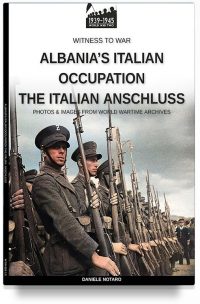
Albania’s Italian occupation – The Italian Anschluss
- €8,99
- The Italian occupation of Albania, which took place in April 1939, is a subject little covered in most texts pertaining to the history of our armed forces and is often mentioned in a few lines or described as an action of little importance and without difficulty. In reality, the invasion of the Kingdom of Albania was a wake-up call and showed all the inefficiency of the Italian Royal Armed Forces in a modern war as the Second World War would…
-
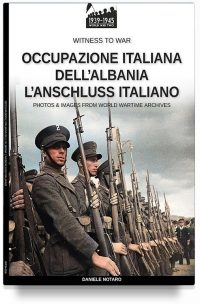
Occupazione italiana dell’Albania – L’anschluss italiano
- €8,99
- L’occupazione italiana dell’Albania, avvenuta nell’Aprile 1939, è un tema poco trattato dalla maggior parte dei testi inerenti alla storia delle nostre forze armate e spesso viene citato in poche righe o descritto come un’azione di poca importanza e senza difficoltà. Nella realtà, l’invasione del Regno d’Albania fu un campanello d’allarme e mostrò tutta l’inefficienza delle regie forze armate italiane in una guerra moderna come sarà poi la Seconda Guerra Mondiale che vedrà il Regno d’Italia subire una sconfitta dopo l’altra.…
-
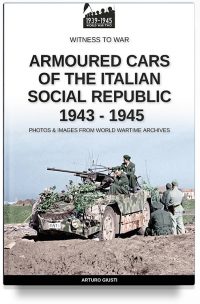
Armoured cars of the Italian Social Republic 1943-1945
- €8,99
- The armoured cars were a perfect example of the adaptability of the Royal Army's forces in World War II, both the domestically developed models and the improvised versions. They were obviously recovered and redeployed by the forces of the Italian Social Republic after the Armistice of 8 September 1943 with completely new tasks. From the patrols of the vast North African desert areas, the small trucks were employed and transformed for anti-partisan combat, which they performed with not a few…
-
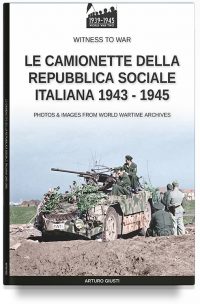
Le camionette della Repubblica Sociale Italiana 1943-1945
- €8,99
- Le camionette furono un perfetto esempio di capacità di adattamento delle forze del Regio Esercito nella Seconda Guerra Mondiale, sia i modelli sviluppati in patria che le versioni improvvisate. Vennero ovviamente recuperate e ripiegate dalle forze della Repubblica Sociale Italiana dopo l’Armistizio dell'8 Settembre 1943 con compiti completamente nuovi. Dalla perlustrazione delle vaste aree desertiche nordafricane, le camionette vennero impiegate e trasformate per la lotta antipartigiana che performarono con non pochi limiti. In questo libro analizzeremo il servizio delle camionette con i…
-
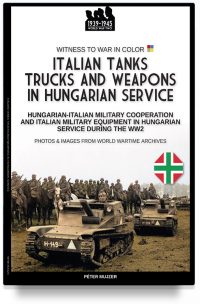
Italian tanks trucks and weapons in Hungarian service
- €9,99
- NEW: WTW IN COLOR! At the end of the First World War, Hungary, as a member of the Austro-Hungarian monarchy, found itself on the losing side. Its army disintegrated and its armaments were acquired or destroyed by the victorious Allied nations. However, in the late 1920s, Hungarian diplomacy did all it could to reduce its isolation, forging relations with Italy and other neighboring countries to try to create a better position for Hungary among European nations. A kind of secret…
-
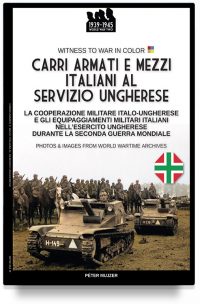
Carri armati e mezzi italiani al servizio ungherese
- €9,99
- Novità: WTW A COLORI! Alla fine della Prima Guerra Mondiale, l’Ungheria, in quanto membro della monarchia austroungarica, si ritrovò dalla parte dei perdenti. Il suo esercito si disintegrò e i suoi armamenti furono acquisiti o distrutti dalle nazioni alleate vincitrici. Tuttavia alla fine degli anni Venti la diplomazia ungherese fece di tutto per ridurre il suo isolamento, stringendo rapporti con l’Italia e altri paesi vicini per cercare di creare una posizione migliore per l’Ungheria tra le nazioni europee. Ebbe subito…
-
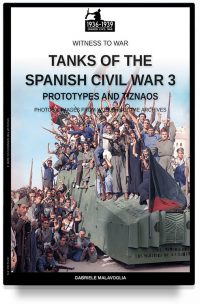
Tanks of the Spanish Civil War – Vol. 3
- €8,99
- The Spanish Civil War was the first conflict to see real clashes between tanks, employed by both sides (at the same time, Italy was fighting in Ethiopia, employing a good number of armoured vehicles, but against an enemy with no tanks at all). Spain was thus the testing ground for modern warfare between armoured vehicles sent from Italy, Germany and Russia. The use of tanks during the Civil War only hinted at some of those aspects that would later make…
-
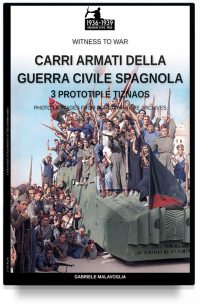
Carri armati della guerra civile spagnola – Vol. 3
- €8,99
- La Guerra Civile Spagnola fu il primo conflitto a vedere veri scontri tra carri armati, impiegati da entrambi le parti in causa (nello stesso periodo l’Italia stava combattendo in Etiopia, impiegando un buon numero di mezzi corazzati, ma contro un nemico del tutto privo di carri armati). La Spagna fu così il campo di prova per la guerra moderna tra mezzi corazzati inviati dall’Italia, dalla Germania e dalla Russia. L’utilizzo di carri armati durante la Guerra Civile lasciò intravedere soltanto…
-
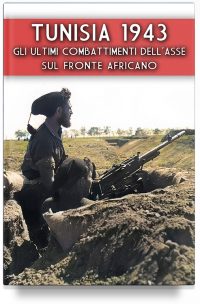
Tunisia 1943: gli ultimi combattimenti dell’Asse sul fronte Africano
- €8,99
- Quando si pensa alla guerra d'Africa, la mente corre subito alla battaglia di El Alamein come ultimo atto della presenza delle forze italiane e tedesche in sul fronte dell'Africa Settentionale. In realtà, pur considerando la battaglia di El Alamein un colpo mortale inferto alle forze dell'Asse, è pur vero che la guerra sul suolo africano si protrasse per altri sei mesi, durante i quali i reparti italo-tedeschi furono impegnati in durissimi combattimenti sul fronte tunisino, combattendo contemporaneamente su due fronti,…
-
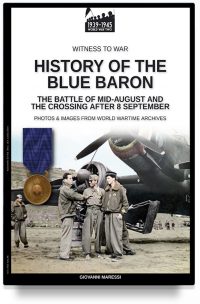
History of the Blue Baron
- €8,99
- This is the story of the Blue Baron, born Carlo Luigi Amedeo Winspeare Guicciardi and his active participation in the Second World War as a pilot officer in the Regia Aeronautica. But let us take two steps back. Carlo Winspeare, son of Edoardo and Clara Sarauw, was born on 13 March 1917 in Valletta (Malta) where his father, who had travelled the world in the retinue of Luigi Amedeo di Savoia, the adventurous Duke of the Abruzzi, was working as…
-
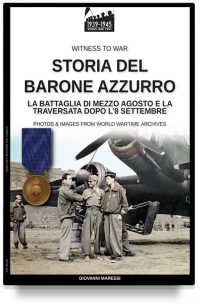
Storia del Barone Azzurro
- €8,99
- Questa è la Storia del Barone Azzurro, al secolo Carlo Luigi Amedeo Winspeare Guicciardi e della sua attiva partecipazione alla seconda guerra mondiale come ufficiale pilota nella Regia Aeronautica. Ma facciamo due passi indietro. Carlo Winspeare figlio di Edoardo e di Clara Sarauw nacque il 13 marzo 1917 a La Valletta (Malta) dove il padre, che aveva girato il mondo al seguito di Luigi Amedeo di Savoia, l’avventuroso Duca degli Abruzzi, svolgeva la funzione di attaché militaire, quale ufficiale della…
-
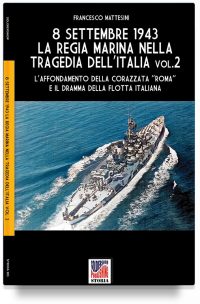
8 settembre 1943: la Regia Marina nella tragedia dell’Italia – Vol. 2
- €8,99
- Quest’opera descrive in due volumi, in modo esaustivo, come dopo lo sbarco degli anglo-americani in Sicilia il 10 luglio 1943, il Governo italiano, il 3 settembre a Cassibile (Sicilia), concluse con suoi rappresentanti un armistizio, "senza condizioni'' e quindi "resa totale", con emissari degli anglo-americani; armistizio che entrò in vigore il successivo 8 settembre. Le condizioni prevedevano che al momento dell'annunzio dell'armistizio, fissato per le ore 18:30, gli italiani scattassero con un sol uomo per attaccare e uccidere i tedeschi,…
Sale!
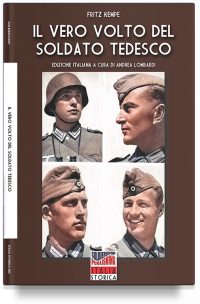
Il vero volto del soldato tedesco (REMAINDER)
Il prezzo originale era: €25,00.€15,00Il prezzo attuale è: €15,00.
Sale!
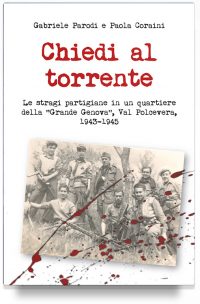
Chiedi al torrente (REMAINDER)
Il prezzo originale era: €25,00.€15,00Il prezzo attuale è: €15,00.